ChatGPT gives kids the answer. Here is what helps them think
We asked ChatGPT and Bowie, a character built for kids, the same question: how much is 7 + 4? The gap between the two replies is the whole problem with AI homework help.
 By Lionel Mora · · 5 min read
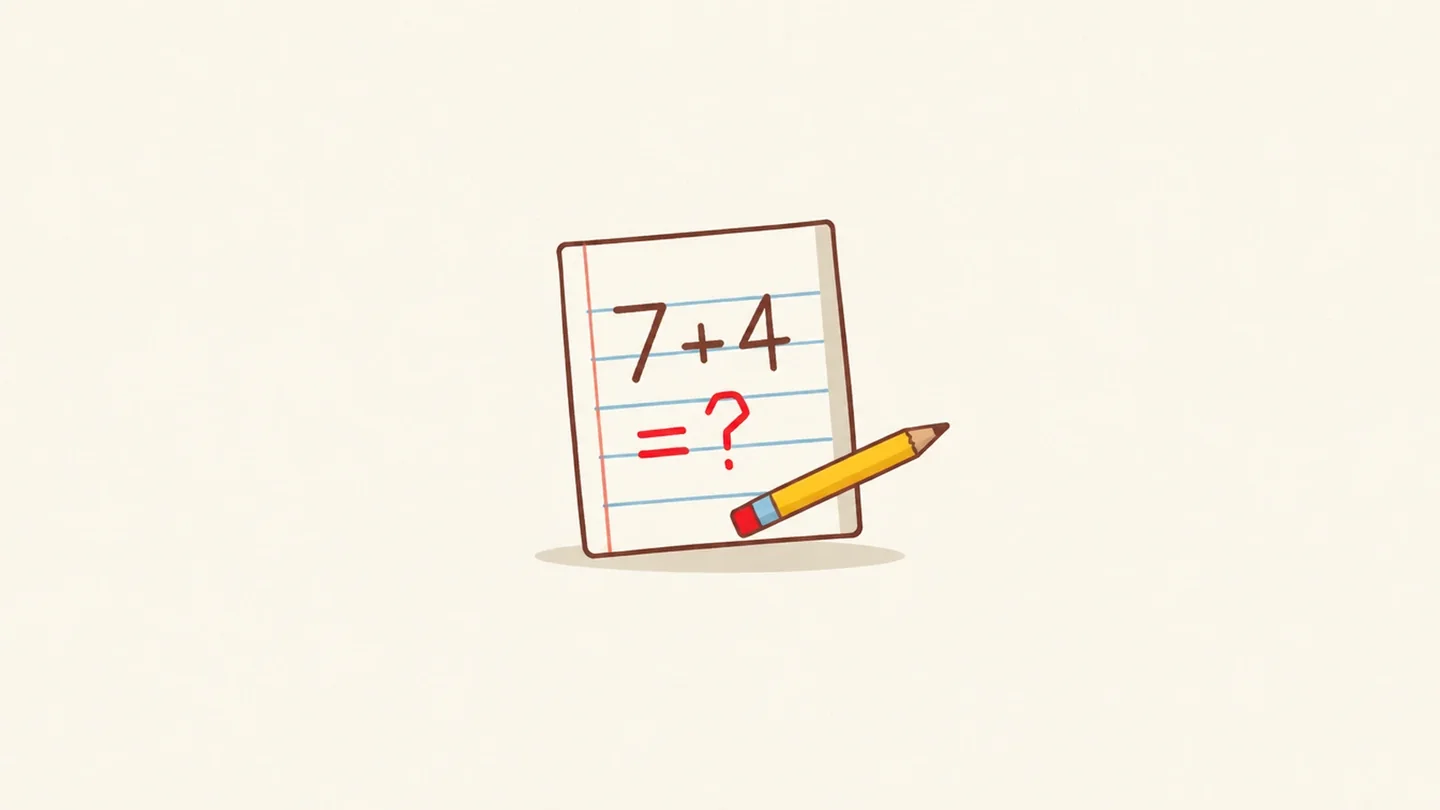
Based on our Instagram reviews: the live demo (2M views).
The short answer
Not on its own. ChatGPT's terms say users must be 13 or older, with a parent's permission until 18. And it is built to answer: ask it 7 + 4 and it says 11. In a large 2025 study, students who practiced with plain GPT-4 did 17% worse on the exam afterwards, while a version that gave hints instead of answers avoided that drop. For kids 6 to 12, good help asks a question back and leaves the last step to the child.
We ran a simple test on camera. One question, asked in two places. That video has now been watched more than two million times.
The test: how much is 7 + 4?
ChatGPT first.
"7 + 4 is 11. Let me know if you need more."
Right answer, instantly, and done. If the goal is a finished worksheet, that's perfect. If the goal is a 6-year-old who can add, nothing happened.
Then we asked Bowie, one of the characters in Marble, the same question. Word for word:
| Bowie | Child |
|---|---|
| Let me show you this one visually. So you've got 7 and 4 of them. What do you reckon the total is? | I don't know. |
| No worries. What if you count the red ones first? | There are 7 red ones. |
| Brilliant. Now, what about the blue ones? | There are 4. |
| So if you've got 7 red ones and add 4 blue ones, what's the total? | Is it 12? |
| Not quite. You've got 7 and then you're adding 4 more. If you count on from 7, what comes next? | 8? |
| Yes, so 7 then 8. Keep going. | Oh, okay, I got it. It's 11. |
| Perfect. You counted on really well there. 8, 9, 10, 11. |
Same answer at the end. Very different conversation. The child got it wrong once, and "Is it 12?" is the most useful line in the whole thing. They left with a strategy called counting on, which works for every sum like this one. Counting on is exactly what US first graders are expected to learn under the Common Core math standards4.
Why getting the answer hurts learning
Teachers already have the answers. Homework exists so your child practices the thinking. If a chatbot does the thinking, the practice never happened.
We have data on this now. In a 2025 study published in PNAS, researchers gave around a thousand high school students GPT-4 during math practice2:
- With plain GPT-4, students scored 48% higher on the practice problems.
- Then came the exam, without AI. The same students scored 17% lower than students who never had it.
- A second group got a version built to give hints instead of answers. Their practice scores rose 127%, and the exam drop mostly disappeared.
Same tool in both groups. What changed was who did the thinking. And those were teenagers. A 7-year-old is more likely to take the shortcut, and has more to lose from it.
Is ChatGPT made for kids?
No. OpenAI's terms say users must be at least 13, and anyone under 18 needs a parent's permission1. ChatGPT is a general assistant for adults, and it's helpful the way adults want: you ask for something, you get it, fast.
In July 2025 OpenAI added Study Mode, a setting that guides students with questions and hints instead of handing over the answer3. For teenagers it's a real improvement. But it's a toggle inside the normal product, so a kid who just wants to be done can switch it off. And the product is still made for 13 and up.
What good homework help looks like for kids 6 to 12
It doesn't matter much who is helping. You, a tutor and an app all need the same moves, and every one of them is in the Bowie conversation above.
- Make it visible. Seven red counters and four blue ones beat "7 + 4" written on paper. Use Lego, coins, grapes, whatever is on the table.
- Ask instead of telling. "What do you notice?" does more than any explanation you can give.
- Make the step smaller. When they're stuck, hold back the answer and ask the next smallest question: "What about just the red ones?"
- Let them be wrong out loud. "Is it 12?" tells you exactly where they are. Respond to the reasoning, not the mistake.
- Name the strategy. "You counted on from 7" turns one answer into a tool they can use tomorrow.
- Leave the last step to them. That's the moment it sticks.
Good teachers have always done this. What changed is that the most popular homework helper on the planet does the opposite by default.
If your kid uses AI anyway
If your teenager is old enough for ChatGPT and has your permission, four rules make a big difference:
- Turn on Study Mode. Then check now and then that it's still on.
- Start every chat with a rule: "Do not give me the answer. Ask me one question at a time and wait for my reply."
- After any AI help, they explain the answer to you in their own words. If they can't, they didn't learn it.
- Same room, same screen. Homework help happens at the kitchen table, not behind a closed door.
For younger kids, I'd skip general chatbots completely. And for any learning app, there's one question worth asking: when my kid is stuck, does it give the answer or ask a question back?
Where Marble fits
We built Marble because we wanted the second half of that video to be normal. Marble is an interactive learning world for kids aged 6 to 12. Our characters ask before they tell and work through a problem one step at a time. Today the quests are about science, making things, creativity and social skills, and that rule holds in all of them. Only a parent can set up a child's account, and there are no ads.
It's not magic. Kids still get stuck and frustrated. But the thinking stays with them.
Questions parents ask
What age can kids use ChatGPT?
13. OpenAI's terms of use say you must be at least 13 to use ChatGPT, and anyone under 18 needs a parent or guardian's permission. It was not designed for kids aged 6 to 12.
Is ChatGPT safe for kids?
It wasn't built for them. Content filters aside, the bigger problem for learning is speed: ChatGPT gives a complete answer instantly, so a child can skip the thinking that homework is there to practice. If an older child uses it, sit nearby, turn on Study Mode and ask them to explain the answer back to you in their own words.
Does ChatGPT Study Mode stop it giving answers?
Only while it's on. Study Mode, launched in July 2025, is an opt-in setting that guides students step by step with questions and hints. It's a toggle inside normal ChatGPT, so a child can switch it off, and the product underneath is still made for ages 13 and up.
How do I help my child with homework without giving the answer?
Ask one question at a time. Make the problem visible with objects or a drawing, ask what they notice, and when they stall, give the smallest hint that gets them moving again. Let them be wrong out loud, then ask how they got there. Praise the strategy, not the answer. For 7 + 4, that means starting at 7 and counting on: 8, 9, 10, 11.
Is using AI for homework cheating?
Depends who does the thinking. If AI writes the answer, the homework gets done and nothing is learned. If AI asks questions, gives hints and makes the child explain their reasoning, it works more like a patient tutor. The PNAS study on high school math found exactly this split.
Sources
- OpenAI: Terms of use (minimum age and parental permission)
- Bastani et al. (2025), Generative AI without guardrails can harm learning, PNAS
- Education Week: What teachers should know about ChatGPT's new Study Mode feature (July 2025)
- Common Core State Standards, Grade 1, 1.OA.C.5: relate counting to addition (Achieve the Core coherence map)
Keep reading
 AI tutors for kids: what the research says worksSome AI tutors raise test scores. Others make kids worse at the test. Three design choices decide which one you get.
 Is AI safe for kids? A parent's guide for 2026What pediatricians, regulators and safety testers say about AI and kids, plus a ten-question checklist for any AI your child uses.
 The zone of proximal development, explained for parentsThe most useful idea in learning science is about a hundred years old. It explains why some homework help works and some ends in tears.